Minnov8

Showcasing Minnesota Technology Innovation

  • Home
  • Minnov8 Gang Podcast
    • Complete Podcast Posts
    • MP3 Archive of All Episodes
  • Blog
  • About
  • Contact

MHTA Angel Tax Credit Panel

May 11, 2010 By Steve Borsch

Join MHTA on Monday, May 24 at the ADC Auditorium for MHTA’s Angel Tax Credit Panel.

Registration:  7:30 a.m.
Program:  8:00 – 9:30 a.m.

The Angel Tax Credit Panel will feature an outstanding line-up of panelists who will discuss the recently enacted 25% tax credit for angel investors who invest in Minnesota high tech start-up companies.

  • Dan McElroy, Commissioner, MN Department of Employment and Economic Development
  • John Alexander, Chairman, Twin Cities Angels
  • Dan Mallin, Co-founder, Minnesota Cup & Managing Partner, Magnet 360 (and Co-chair of the Science & Technology Economic Development Project Task Force last fall)
  • Jay Hare, Partner, PricewaterhouseCoopers
  • Moderator:  Joy Lindsay, President, StarTec Investments and chair, MHTA board of directors

The cost for this event is only $25 and free for start-up companies. Start-up companies can indicate their status by selecting “start-up company” on the registration page.

This event is being co-presented by the BioBusiness Alliance of Minnesota, MN Nano and the Minnesota Cup.

Filed Under: Events

Web Innovation Is Everywhere in Minnesota – Even In an Ice Cream Shop!

May 10, 2010 By Graeme Thickins

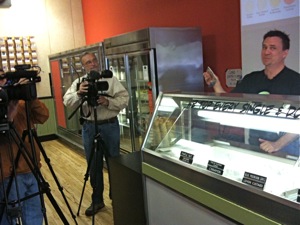
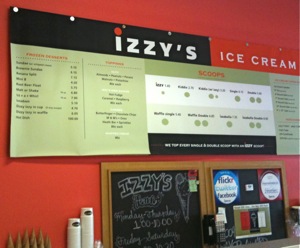
A small retailer in St. Paul that’s obsessed with serving its customers has introduced an innovative new convenience for them that would shame even the largest retail giant — and it’s been no less than a year in the making.  Izzy’s Ice Cream in St. Paul today announced a service that delivers real-time updates to its loyal customers about ice cream flavors currently being served in-store via its web site, Facebook and Twitter pages, and email updates.

It’s called “Izzy’s Flavor Up!” and it essentially allows customers to subscribe to their favorite ice cream flavors. Current flavors are updated every three minutes on its “flavor grid” web page.

With web site design and technology assistance from Bloomington MN-based The Nerdery (aka Sierra Bravo), Rogers MN-based RFID firm AbeTech, and CA-based tech vendor Phoenix Technologies, Izzy’s Ice Cream is now tagging all its 90+ flavors of ice cream in-store with radio frequency identification (RFID) technology.  Each flavor’s tub is tagged with a unique code that’s automatically scanned when placed in the dipping cabinet.

What it means for an ice cream lover is nothing less than nirvana. Customers can now know, with absolute certainty anytime around the clock, which flavors are available in-store. When new flavors are removed from or added to the dipping cabinet, Izzy’s web site, Facebook and Twitter pages will automatically be updated, alerting fans to the latest changes. Customers can sign up for email alerts for their favorite flavors – so they’ll always know when their favorite Hot Brown Sugar, Soy Peanut Butter, or Peace Coffee ice cream is available. My buddy Al Maruggi told me today that Izzy’s has the best coconut ice cream in the Twin Cities, too, as he licked a sample thereof.

We also learned that SMS or text updates are on the way, if you’d rather get your alerts that way.  In-store customers can see the technology in action via a large-screen monitor that shows which flavors are now being scooped.

“Our customers are extremely passionate about their favorite flavors of Izzy’s ice cream,” said Jeff Sommers, Izzy’s owner, in a statement. “Their enthusiasm, while motivating me to continue creating delicious flavors, can also prove to be a customer service issue. Before today, our customers had no way of knowing if their favorite flavors were going to be available when they walked through the door.  This system solves that problem and makes it easier for our customers to enjoy their favorite flavors.”  The title of a video that Izzy’s crack PR firm put up on YouTube says it all: “How to Subscribe to Ice Cream.”

The nameplates for each flavor in the store have RFID chips built in, which are then read by antennae anchored in the dipping cabinet. The inventory is automatically updated simply through the act of an employee changing flavors in the dipping cabinet. That act triggers an inventory update, which in turn publishes the current flavors to multiple channels: the in-store screen, Izzy’s website, its Twitter and Facebook pages, and it’s automated emails to subscribers of individual flavors.

Izzy’s isn’t just a retail business. It has a catering business as well, and a wholesale business that has signed up several upscale grocery stores and restaurants throughout the Twin Cities that now offer its products — Kowalski’s, just to name one chain.

Regarding its latest new wrinkle, “This is undoubtedly one of the first uses of RFID as a customer service application,” said the company’s statement.  Izzy’s has a history of embracing new technology, having installed solar panels in 2005.  Owner Jeff Sommers also showed attendees at his media briefing today an innovative new cleaning system he has implemented in Izzy’s kitchen called “Zap Water,” which is an amazingly more environmentally friendly way to maintain a germ-free, allergen-free environment.

Izzy’s gets my vote as a true Minnesota innovator!  Now, excuse me, I’m jumping onto their web site to check if my favorite flavor is still available tonight….

Filed Under: Marketing Innovation, Social Media

StarTribune: Digital books put on hold at UofMN

May 10, 2010 By Steve Borsch

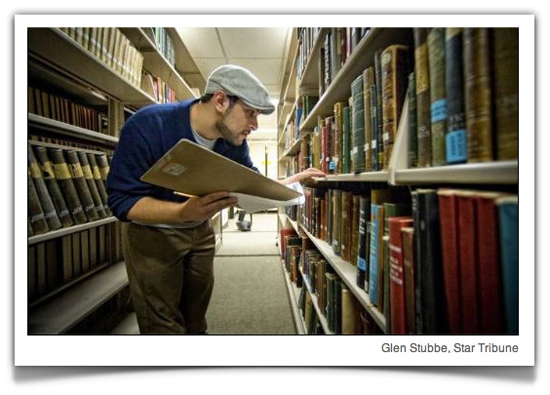
Last Monday Minnov8 contributor, Liz Geil, posted about the UofMN project to have Google digitize many important volumes in the library system. The StarTribune had an article today about the initiative to enable a million University of Minnesota books to be digitally copied by Google under a plan to put the world’s libraries online. But most of the book copies are being locked in an archive, the digital equivalent of gathering dust.

No one will be able to read these digital books — at least for now — because of a five-year-old copyright lawsuit against Google. Five million books at the University of Michigan are threatened with the same fate.

Bummer. Read the entire article here.

Filed Under: Internet & Society, Internet & Web

The Social Media Revolution is Affecting All of MN

May 8, 2010 By Steve Borsch

About one year ago, Erik Qualman, the author of Socialnomics, produced a popular video highlighting the impressive facts and figures about the growing popularity of social media and now has this new one you can watch below…

…and if you are in business, any kind of organization or in education, if you can’t see how this is already affecting you (and will affect you going forward) send me an email and we’ll talk!  😉

httpvhd://www.youtube.com/watch?v=lFZ0z5Fm-Ng&feature=player_embedded

via Crowdspring

Filed Under: Social Media

Google, Bing & Nat’l Experts on Internet Marketing

May 7, 2010 By Steve Borsch

GetListed.org, a company committed to helping small business owners maximize their online presence, is presenting a seminar called “Local University” on Thursday, May 13th at the Westin Edina Galleria. The event will feature representatives from Google, Bing, and respected leaders of the local search marketing field.  The goal of the seminar is to provide business owners actionable advice about how the search engines work, and a clear understanding of what they can do to improve the presence of their business on the Internet.

The event features two identical half-day sessions (8am – noon and 1pm – 5pm) and the cost is $129 but you can visit them here and if you’d like to attend, use the discount code ‘minnov8‘ and get in for only $49.

Filed Under: Events

Newsbytes for Tuesday, May 4, 2010

May 4, 2010 By Steve Borsch

Newsbytes graphicNewsbytes is a collection of links to articles and posts from around the ‘net of interest to Minnov8 readers:

  • Apple sells 1 million iPads in 28 days. Took iPhone 74 days. Plus, Minnesota-based analyst Gene Munster of Piper Jaffray estimated that Apple sold about 300,000 units over the weekend, similar to the 300,000 Apple sold the first day of sales April 3. He said the 3G unit was sold out in 49 of 50 stores he checked, suggesting that long term, 3G units will make up about 40 percent of all sales while Wi-Fi units will make up the remaining 60 percent. In related news, is the iPhone code ban facing antitrust inquiry? and Apple Policy Said to Prompt U.S. Allegation by Adobe
  • HTC’s Incredible Android Smartphone Hits the Market
  • Twitter Launches Embeddable Tweets and PCMag’s Lance Unaloff thinks Twitter is the new CNN
  • Governor Pawlenty says Minnesota needs to be more competitive. Healthy state economies will play a critical role in future job creation, but Minnesota does not rank among the nation’s top 10 “growth performers,” according to a U.S. Chamber of Commerce study rolled out Monday by Gov. Tim Pawlenty.
  • KeyOn Announces Acquisition of Network Assets in Iowa and Minnesota. KeyOn is one of the largest providers of wireless broadband, satellite and voice over Internet protocol (VoIP) services in the United States, primarily targeting underserved markets with populations generally less than 50,000. (Good thing for rural Minnesota?)
  • Google Acquires 3D desktop company Bump Technologies
  • Microsoft’s IE Sinks While Google Chrome’s Market Share Triples
  • Seven things you need to stop doing on Facebook and tech pundit Leo Laporte mentioned on TWiG 39 that he’s going to delete his Facebook profile over the incomprehensible social graph moves — and Leo’s inability to understand their impact on privacy settings (which he explains as, “If I can’t understand them…how can the average person!“) — made by Facebook at F8, their developer conference.
  • Bill Gates says that Microsoft has some tablet projects in the works.

Filed Under: Newsbytes Tagged With: Android, Google, iPad, Microsoft, Minnesota

Startups–Lean or Not–Beware Online Legal Forms

May 3, 2010 By Sam Glover

"Fail Whale" photo by binxitron

You can find anything online, including legal documents. But that doesn’t mean you should use them. Two local lawyers recently put LegalZoom and LawDepot, two popular online legal forms providers, to the test.

LawDepot calls itself a “trusted, do-it-yourself legal” website. LegalZoom says “we put the law on your side,” and features favorable quotations from the Wall Street Journal and a lawyer on its front page.

It remains true, however, that you get what you pay for. For example, employment lawyer Karen Lundquist recently took a good, hard look at LawDepot’s $15 employment agreement. She found that it actually contained a provision that was illegal under federal law. In other words, there is no state in the country where the term would be legal. In every state, a company that tries to cut costs by using LawDepot’s employment agreement is just begging to get sued.

Another local lawyer, Greg Luce, took a look at LegalZoom’s $69 will package. Luce tried to put a positive light on what he got, calling it “a good start.” Not exactly a ringing endorsement.

There is an old saying: “only a fool has himself for a lawyer.” Downloading online legal forms is like playing Russian Roulette with your business. Unless you have the expertise to spot the problems Lundquist and Luce ran into, you probably shouldn’t use them. Of course, if you had that expertise, you probably wouldn’t need the forms, anyway.

Cheap legal forms may be tempting, but sometimes the cheaper path costs a bit more up front. You will have trouble keeping your startup lean while you are defending yourself from an employment discrimination lawsuit. Pay a lawyer for the right document, and you can avoid that ugly scenario.

Skip the online legal forms unless you know what you are doing.

Sam Glover is a Minneapolis business lawyer for geeks. He also edits the law firm marketing and practice blog Lawyerist, Lawyerist, and Caveat Emptor, a consumer law blog, and speaks frequently on law practice and lawyering. We’re pleased to have Sam as a new contributor to Minnov8.

Filed Under: Startups & Developers

MN Mobile Developers Clocking Millions of Downloads

May 2, 2010 By Graeme Thickins

Local developers of apps for mobile devices, especially those designed for Apple’s platform, are quietly amassing large numbers of users for their creations, I’ve been learning.

This past week, I thought it would be an interesting little project for me to do a survey of sorts as the basis for this blog post. What I did (totally unscientific, I admit) was ask all the Twin Cities-area mobile developers I happened to know just how many apps they have on the two major platforms, Apple and Android, and how many users have downloaded their apps to date.  It turned into a bigger project than I thought!  It required a lot of back-and-forth emails to clarify all their current offerings.  But I’ve sorted it all out as best I can, and you’ll see the results of that survey in the second half of this post.

The two most-experienced mobile app development firms in Minnesota I have known quite well for some time, having been a consultant to both in the past: DoApp and CodeMorphic.  These two firms began developing for the iPhone platform as soon as Apple released the SDK in March 2008, and had their first creations in the App Store from the get-go, in the case of DoApp (July 2008), and CodeMorphic soon after. So, it was no surprise to me, then, that these two have the largest numbers of downloads locally. But many more Minnesota developers jumped in after them, and still are jumping in. In fact, I learn about a new one almost weekly. Some publish apps in their own name, some only for clients, and some do both. (For apps developed for-hire for client companies, developers cannot track ongoing download numbers in real time — only their clients know, unless they tell them or otherwise publicize the numbers. But the developers can certainly make educated guesses, which some of them did for me for my survey.) What triggered this idea for a post was a news announcement one of the two big local development firms just put out …

DoApp Inc. Announces One Million Downloads of Its “Mobile Local News” App

Actually, it’s not one app; there are more than 100 of these DoApp “MLN” apps out there, because that’s how many customers (media outlets) have signed up with DoApp to date to use what is really an “app platform.”  It allows DoApp’s customers — TV news stations, newspapers, online publications, and radio stations — to easily brand the app for themselves and deliver their content via smart phones and other mobile devices, including the Apple iPad.  (DoApp has not yet submitted to Apple an app designed specifically for the iPad, though its many iPhone apps do work on that new device.) In its recent announcement, DoApp counted downloads for all its locally-branded Mobile Local News apps, including both Apple and Android downloads, in saying they have surpassed the one million number. The company first made the Mobile Local News app available in April 2009. For more about all of DoApp’s products, see the company’s web site.   (In the photo: Joe Sriver, center, Founder; Wade Beavers, left, CEO; and Dave Borrillo, VP-Software Development.) I conducted an email interview with DoApp founder Joe Sriver to learn more about the current status of his company’s Mobile Local News app business, which follows…. …  [Read More…]

Filed Under: Emerging MN Companies, Mobile Technology Tagged With: Apple, iPad

Angel-backed Startups 30-50% More Likely To Be Successful

April 27, 2010 By Steve Borsch

A landmark study was just released by two professors, one from Harvard Business School and the other MIT, which reveals that, for the most part, angel-backed companies enjoy performance gains of 30-50% when compared to other non-funded startups.

From the executive summary:

What difference do angel investors make for the success and growth of new ventures? William R. Kerr and Josh Lerner of HBS and Antoinette Schoar of MIT provide fresh evidence to address this crucial question in entrepreneurial finance, quantifying the positive impact that angel investors make to the companies they fund.

Angel investors as research subjects have received much less attention than venture capitalists, even though some estimates suggest that these investors are as significant a force for high-potential start-up investments as venture capitalists, and are even more significant as investors elsewhere. This study demonstrates the importance of angel investments to the success and survival of entrepreneurial firms. It also offers an empirical foothold for analyzing many other important questions in entrepreneurial finance.

Key concepts include:

  • Angel-funded firms are significantly more likely to survive at least four years (or until 2010) and to raise additional financing outside the angel group.
  • Angel-funded firms are also more likely to show improved venture performance and growth as measured through growth in Web site traffic and Web site rankings. The improvement gains typically range between 30 and 50 percent.
  • Investment success is highly predicated by the interest level of angels during the entrepreneur’s initial presentation and by the angels’ subsequent due diligence.
  • Access to capital per se may not be the most important value-added that angel groups bring. Some of the “softer” features, such as angels’ mentoring or business contacts, may help new ventures the most.

I came across this post from the excellent blog of David B. Lerner, a guy who describes himself as, “a Serial Entrepreneur, Director of Columbia University Venture Lab/Spin-Offs Program, Angel Investor, and Golfer-in-Exile” but who is, most importantly, someone who tracks this space and has this series on angel investing if you’d like to know more.

Filed Under: Startups & Developers, Tech Investors

University of Minnesota Participates in Google Books Project

April 26, 2010 By Liz Giel

A recent news release from the University of Minnesota announced that they have sent their first shipment of books over to Google to participate in the Google Books project. The University of Minnesota is the first school in the state to participate in this program.

The initiative will take approximately two years to complete. The idea behind this is to preserve legacy library works, but it will also provide university students the luxury of having these volumes available online to search, and perhaps even read in their entirety.

According to the CIC projects site, “Google will scan and make searchable public domain works as well as copyrighted materials, in a manner consistent with copyright law.” In the case of the University of Minnesota, over one million works will be digitized from their libraries. All works will be fully searchable, and some will be fully readable.

While this may be inconvenient for students looking to check-out works that are currently in Google’s hands, they will have the ability to find them through inter-library loans. In addition, the books will only be unavailable for a short time. According to Marlo Welshons, Communications Director for University of Minnesota Libraries, “The timeframe for the books being ‘checked out’ by Google for digitization is about the same as the loan period of any other patron.”

This process comes at a low cost to University libraries: Google is footing the bill for book transfers and scanning. The library is only responsible for finding and returning the books to their shelves.

For more information, check out the University of Minnesota’s Google Digitization Project page.

Filed Under: Internet & Society, Internet & Web

« Previous Page
Next Page »

Search

Minnov8.com Is Now An Archive

As of April 2017, Minnov8 posts and podcasts are now an archive as this site is no longer actively published. Thanks to all of you who have been reading and listening since our founding in 2008!

Minnov8 Post Categories

Connect with Minnov8

  • Email
  • Facebook
  • Twitter
  • YouTube

Minnov8 Gang Podcast

Page Update Notification

Be Notified When This Webpage Is Updated. Click “Ok” Below…

powered by ChangeDetection


Copyright © 2026 · Log in
This work is licensed under a Creative Commons Attribution-ShareAlike 4.0 International License.